Bitcoin vs Gold in 2026 Is Crypto the New Safe Haven Amid Global Instability
- Arshdeep Singh
- May 18
- 4 min read

Global markets have faced significant turbulence in recent years, with geopolitical tensions, inflation spikes, and economic uncertainty shaking investor confidence. As traditional assets like stocks and bonds show vulnerability, many seek refuge in safe-haven investments. Historically, physical gold has been the go-to asset during times of crisis. Yet, with the rise of cryptocurrencies, especially Bitcoin, a new debate has emerged: can Bitcoin serve as the new "digital gold" in 2026? This post explores this question by comparing Bitcoin and gold, analyzing market instability, investment risks, and future price predictions.
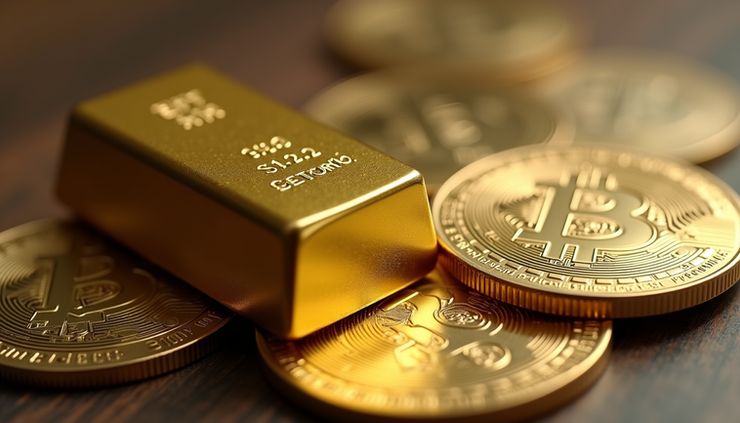
Global Market Instability and Its Impact on Investment Strategies
The global economy in 2026 remains fragile. Inflation rates in major economies hover above target levels, central banks continue adjusting interest rates, and geopolitical conflicts disrupt supply chains. These factors contribute to market volatility and uncertainty.
If you ask any traditional uncle in India, he will tell you to buy 10 grams of physical gold for security. But if you ask a Gen-Z investor, they want Bitcoin. My take? Don't blindly follow the hype. If you can't digest a 20% drop in one day, crypto is not for you. Stick to mutual funds."
Investors traditionally turn to assets that preserve value during such times. Gold has long been favored because of its physical scarcity and historical role as a store of value. However, the rise of digital assets like Bitcoin introduces an alternative that promises decentralization and limited supply.
This instability forces investors to reconsider their portfolios. Diversification now often includes a mix of traditional assets and cryptocurrencies. The question is whether Bitcoin can reliably act as a safe asset when markets falter.
Can Bitcoin Truly Serve as a Safe Asset Like Physical Gold?
Bitcoin shares some characteristics with gold that make it attractive as a store of value:
Limited supply: Bitcoin’s total supply is capped at 21 million coins, similar to gold’s finite availability.
Decentralization: Bitcoin operates on a blockchain network without central authority, reducing risks of government interference.
Portability: Bitcoin can be transferred globally with ease, unlike physical gold which requires secure storage and transport.
Despite these advantages, Bitcoin differs significantly from gold in key areas:
Volatility: Bitcoin prices have shown large swings, sometimes moving more than 10% in a single day. Gold’s price tends to be more stable.
Regulatory uncertainty: Governments worldwide are still defining cryptocurrency regulations, which can impact Bitcoin’s accessibility and legality.
Adoption and trust: Gold has thousands of years of trust as a store of value. Bitcoin is just over a decade old and still building mainstream acceptance.
In 2026, Bitcoin’s role as a safe asset depends on whether it can reduce volatility and gain regulatory clarity. For now, it remains a high-risk, high-reward investment compared to gold’s steady reputation.
Bitcoin Price Prediction and Cryptocurrency Volatility
Predicting Bitcoin’s price is challenging due to its sensitivity to market sentiment, technological developments, and regulatory news. Analysts offer a wide range of forecasts for 2026:
Some expect Bitcoin to reach $150,000 to $200,000 per coin, driven by increased institutional adoption and limited supply.
Others warn of potential crashes below $20,000 if regulatory crackdowns intensify or if competing cryptocurrencies gain dominance.
Volatility remains a defining feature. For example, in 2025, Bitcoin experienced a 40% drop within two weeks following regulatory announcements in major markets. This level of fluctuation contrasts with gold, which rarely experiences such sharp declines.
Investors considering Bitcoin must be prepared for price swings and understand that short-term losses are possible even if long-term growth occurs.
Benefits and Risks of Investing in Gold Versus Crypto
Benefits of Gold Investment
Stability: Gold prices tend to rise during economic downturns and inflationary periods.
Tangible asset: Physical gold can be held and stored independently of digital systems.
Widely accepted: Gold is recognized globally and can be liquidated easily.
Risks of Gold Investment
Storage and security costs: Physical gold requires secure storage, which can be expensive.
Lower returns: Gold typically offers modest returns compared to high-growth assets.
Limited income: Gold does not generate dividends or interest.
Benefits of Bitcoin Investment
High growth potential: Bitcoin has shown exponential growth over the past decade.
Ease of transfer: Digital nature allows quick, borderless transactions.
Decentralized control: No single entity controls Bitcoin, reducing political risks.
Risks of Bitcoin Investment
High volatility: Price swings can lead to significant losses.
Regulatory risks: Potential government bans or restrictions could impact value.
Security concerns: Risks of hacking and loss of private keys.
Investors must weigh these factors based on their risk tolerance and investment goals. A balanced portfolio might include both assets to benefit from gold’s stability and Bitcoin’s growth potential.
Is Crypto Safe in 2026?
Safety in investment depends on stability, regulation, and market acceptance. Cryptocurrencies have matured since their inception, but they still face hurdles:
Regulatory clarity is improving but varies by country.
Technological improvements like layer-2 solutions and enhanced security protocols reduce risks.
Institutional involvement is increasing, lending credibility.
Despite progress, crypto remains riskier than traditional assets. Investors should treat it as a speculative part of their portfolio and avoid allocating funds they cannot afford to lose.
Final Thoughts on Gold vs Crypto Investment in 2026
The debate over Bitcoin as the new "digital gold" is far from settled. Gold continues to offer a reliable safe haven amid global instability, backed by centuries of trust and physical presence. Bitcoin presents an innovative alternative with strong growth potential but carries higher risks due to volatility and regulatory uncertainties.


Comments